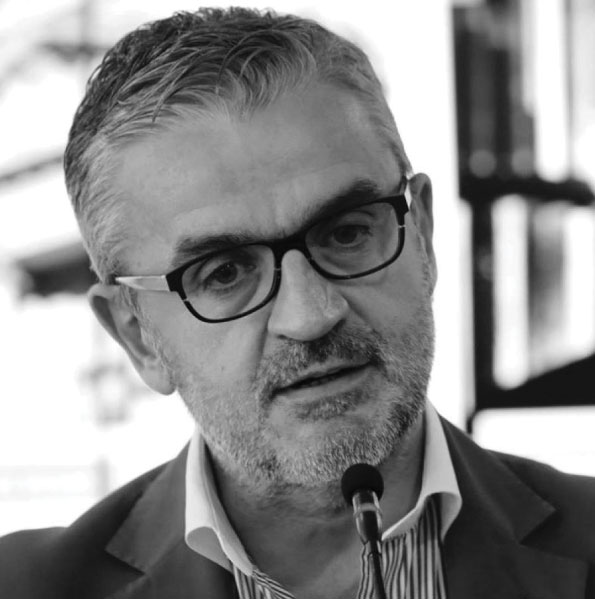
We have the same values, principles and idea of multilateral cooperation…. [It] is our collective task, to keep the blue flags flying, and to keep demonstrating the value of cooperation[1].
Camilla Brükner – UN Brussels Chief
i. Definition of Human Capital
One of the founders of the concept of human capital, the Nobel winning scholar Gary Becker, considers human capital to be “the knowledge, information, ideas, skills, and health of individuals”[1] (Becker [2002]. This definition takes a wider approach to human capital compared to what, e.g., the OECD[2] proposes, focusing more its economic dimension when defining human capital as “the knowledge, skills, competencies and other attributes embodied in individuals that are relevant to economic activity”. In each case, human capital is considered to be a fundamental factor for economic prosperity. The World Bank in its 2017’s Human Capital Project uses a more complete definition of Human Capital, which is widely and commonly understood and agreed by development partners and many countries at all income levels: “Human capital consists of the knowledge, skills, and health that people accumulate throughout their lives, enabling them to realize their potential as productive members of society”[3].
Building on this foundation, Nobel Prize winner Theodore W. Schultz’s seminal work provides additional depth to our understanding by identifying five key categories of human investment activities: (1) health facilities and services, (2) on-the-job training, (3) formal education, (4) adult study programs, and (5) migration to change job prospects. This framework emphasizes that people invest in themselves not for immediate consumption but with expectation of future gain, and such improvements amount to investment capital. Based on this work, Kevin McNamara describes human capital stocks to represent the existing skills and knowledge base of a workforce that supports a community’s economic structure, while human capital flows refer to the rate at which new skills and knowledge are being added to this existing foundation through ongoing investments and development activities.
Thus, the concept of human capital emphasizes, at minimum, sustained investments in health, education, and the social protection of individuals, which align directly with protection from poverty (SDG1), quality education (SDG 4), good health and well-being (SDG 3), and decent work and economic growth (SDG 8). Recognizing the growing complexity and interconnectedness of the global economy and the broader set of attributes required for individuals to excel and flourish, as well as the need to accelerate human capital development in Albania, early childhood development, gender equality, and vocational training need to be in consideration when tackling with the wide-ranging issues of human capital development.
The development of human capital is the result of intentional and cumulative investments made by governments and households to support individuals to become healthy, engaged, and productive members of society. However, not all individuals have equal access to the opportunities and resources that will enable their full and active participation in society. Health, education and skills, social protection, and other complementary policies informed by rigorous measurement increase individuals’ and countries’ human capital and pave the way to a more prosperous and inclusive future for the people which in turn contribute to economic growth and political stability for the country.
Several of the six transformative entry points or six key transitions the United Nations has identified for accelerating the SDGs (food systems; energy access and affordability; digital connectivity; education; jobs and social protection; and climate change, biodiversity loss and pollution) and to be discussed at the Summit of the Future in September 2024, are deeply intertwined with the development of human capital.
For instance, the transition towards better educational systems is crucial. Enhanced education systems capable to deliver high-quality education for all children, starting from the early years, empower individuals with the skills, knowledge and dispositions necessary to successfully learn, innovate and adapt, which are critical for transitions in other areas such as digital connectivity and jobs and social protection. Similarly, the focus on jobs and social protection is vital; by ensuring meaningful employment and social safety nets, particularly for the most marginalized, societies nurture human capital by enabling individuals to invest in their education and health without the looming threat of economic insecurity. Such a comprehensive approach through key transitions, which account for synergies and tradeoffs, ensures a more resilient workforce ready to tackle the challenges presented by other transitions, including those related to climate change, energy access, and food systems.
Therefore, fostering human capital supports broader systemic changes required for sustainable development. A lifecycle perspective to human capital development acknowledges and incorporates how human capital is built, protected, and utilized along the life cycle spanning early childhood to old age, by tracing the individual from birth through all stages of life to ensure that they lead a complete and productive life.
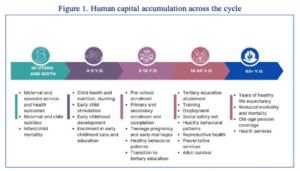
Figure 1. Human capital accumulation across the cycle
Source: Adapted from World Bank (2019) Insights from Disaggregating the Human Capital Index
Looking at human capital from this perspective provides a rich framework to consider possible government interventions aimed at improving human capital in Albania, including early childhood development and education, tertiary education, health and old age financial protection, social protection, labor market measures, and active labor market policies. To promote equitable human capital development, the Government and stakeholders need to undertake an integrated approach to human capital accumulation and reduce fragmentation in policy and service delivery aimed at building, protecting and using human capital in Albania.
ii. Challenges and opportunities the ‘Human Capital’ sector present in Albania
As Albania’s EU accession process continues to accelerate and will likely drive formulation and implementation of development strategies and policies, the country’s key development challenges, and at the same time opportunities for continuing to deploy support, resources and qualified expertise by the EU-UN-WB in the area of Human Capital Development are multiple: tackling poverty and exclusion; the country’s ageing and declining human capital stock, mostly because of migration abroad but also because of decline in fertility; the poor quality of existing labor force stock, difficult transition of youth to work, and low quality of jobs created, due to low investment in education, and economic structure that emphasizes the skills mismatch; slow economic growth coupled with possible rising fiscal pressures related to multiple crisis, climate risks and insufficient revenues to support social protection and overall human capital development policies throughout the lifecycle from childbirth, including child care to transition to work to pensions. According to Albania’s Human Capital Index (HCI),[4] – a World Bank index that does not measure HC inputs, but rather HC outputs – Albanians born today will only be 63 percent as productive when they grow up as they could be with complete access to education and health services. This value is lower than the average HCI for Europe and Central Asia (ECA). The HCI is higher for girls (66 percent) than boys (61 percent), driven by health and educational outcomes differences. Additionally, as measured by the HCI, the productivity of a future worker of a child born today among the wealthiest of households is 64 percent, while it is 50 percent for a child born in the poorest, with a gap of 14 percentage points.[5]
Relative poverty, deprivation and vulnerability remain high in Albania, indicating insufficient access to education, healthcare and social services, which impoverishes human capital as these lead to reduced economic opportunities, less social mobility, health and well-being. Poverty rate[6] accounts for 20.6% in 2022, while the share of vulnerable people, or at risk of being poor before social transfers is as high as 36.5%, with rural and minority populations more prone to hardships and vulnerabilities, likely affecting their education demand, especially for girls. Poverty and social exclusion disproportionately affect vulnerable groups in Albanian society, including women, children, youth, older persons, persons with disabilities, people with intermittent employment, and those in rural areas, but also marginalised groups such as Roma and Egyptian communities, and LGBTIQ+ individuals. These groups experience disproportionate poverty due to lack of education, social care services, housing, employment opportunities, and healthcare access, perpetuating a cycle of poverty across generations. The percentage of people at risk of poverty is higher among households with dependent children (24.4%) compared to those without dependent children (12.2 %). Child poverty levels in 2022 were estimated at 27.4%, as opposed to 22% for the adult population 18 – 64. All these figures measuring poverty and risk of being poor show slight improvements over the years, yet rates of economic growth at around 3.5 – 3.2 % (as projected in the mid-term) appear to not able to lift people out of poverty at sustained pace.
Large migratory flows[7] of working-age population, followed by lower birth and fertility rates indicate a continuous impoverishment of Albania’s human capital stock. Population is calculated at 2,76 million in January 2023, registering a 1.1% decline as against the same period in 2022[8] – following a decades-long depopulation trend from 3.2 million in 1991.
Census[9] reveals that the resident population of Albania is 2,402,113 persons, marking a decline of approximately 420,000 people compared to the 2011 Census. Average age in 2023 is 42.5 years old as compared to being 35.3 years old in 2011, indicating that Albania’s s population is aging fast – EU average in 2023 was 42.2 years old. Total number of children under 18 is 457,974 – representing 19 percent of the population. This decline continues a trend observed since 1990, primarily driven by emigration, and damaging the human capital stock and potential in Albania.
The negative flow of human capital through migration abroad continues at a sustained pace – in 2022, 46,460 persons left Albania, registering an increase by 10.5% compared to 2021[10] Thus, Albania’s working-age population stock is shrinking as people emigrate in search of better job opportunities – the diaspora represents a substantial 57 percent of the country’s current population and half of the remaining population is considering leaving the country.[11] Human capital is impoverishing faster recently, as the profile of migrants and reasons for immigration have shifted, from a majority of unskilled young men in the 1990s, to familial reunification in the 2000s, and recently more well-educated and qualified workers moving abroad for better educational and professional perspectives. Recently, inward migration[12] is reported to have increased by 26.1% yoy in 2022, but figures remain negligible – there are a total 18,151 foreigners; about 43,7% are employed accounting for 0.006% of the total workforce. Inward migration trends need to be further observed and consolidated, before being able to measure any significant impact. The population decline during the past three decades has resulted also from a slow-down in the number of births from over 80,000 per year in the 1980s down to 24,688 in 2022. For the first time, in 2021, the number of births was below the number of deaths, although in 2022 there were 640 births more than deaths. The fertility rate dropped from 6 children per woman to 2.15 at the beginning of the century. It continues its decrease – in 2022 fertility rate registered a further decline to 1.21 children per woman compared to being 1.39 in 2021. As a combination of all these factors, Albania is aging fast, as the median age[13] of the population sets at 38.8 years in 2021; it was 23.4 thirty years ago and 19.6 in the early 1950s. In 2022, there were 24.4 senior people aged 65 and more for 100 adults age 20 to 64. It was only 13.9 in 2001 and the perspective for 2031 is to reach 35%. This trend puts pressure on Government budgets for the funding of pensions and social security for an ageing population. Social insurance spending currently accounts for the majority of government expenditures, projected to be 42% of recurrent expenditures in 2025, presenting a major constraint in future years as the working population diminishes.
Poor quality of the existing human capital stock, and low quality of jobs created[14], stems also from low investment flows in education, and economic structure that emphasizes the skills mismatch. Labor productivity is persistently low in Albania, and if not declining – as measured by the WB in 2019 – it is found to be stagnating[15]; Albanian firms are between seven to ten times less productive than the EU average firm[16]. Several Skill Needs Analysis[17] have highlighted the skills mismatch that exist in the labor market[18], with education and labor market needs – yet to come to terms with each other – while a large share of Albania’s economy is in agriculture 18.6%[19], which employs more than 34%[20] of the workforce stock; Industry manufacture accounts for 10%, dominated by low skill and labor-intensive activities, employing 11.7%; and tourism that has expanded rapidly in last years, but which again is a labor-intensive sector characterized by a low skill demand. The current labor force stock has a substantial need to upskilling[21] including in the ICT sector. Investment flow in the education sector, across all stages of education starting with early childhood, which is an important factor for the development of Human Capital, if not the most important – in terms of building skills, agility, resilience and prospect for growth and prosperity for any individual – is rather low. The average for education expenditure to GDP in the Western Balkans is 4.6 percent. By comparison, the world average in 2019 based on 165 countries is 4.43 percent. Investment flow in education in Albania[22] accounted for 3.1 percent of GDP in 2019 and 3.4 percent of GDP in 2020, falling to 2.1% of GDP in 2023. Hence, the education system’s capacity to generate quality human capital flows is affected by insufficient public spending, inefficient allocation of resources, lack of teachers with relevant education in small municipalities, weak teacher career growth incentives and professional development, and low instructional time[23].
An indicator of the insufficient quality of Albania’s education system is the PISA scores, which reveal that Albanian youth aged 15 years old perform below the OECD average in reading, mathematics, and science (PISA 2018[24], PISA 2022[25]). This translates into low quality and attainment across all education levels, and this situation is likely worse in rural areas and among disadvantaged population, contributing to a circle of poverty.[26] It indicates that years of schooling are important for children, but even more important is what children learn during these years of schooling. The net enrolment rate[27] (NER) in primary education in 2022-2023 was 89.5%, slightly down on the year before (92%). There has also been a decline in the NER of students in upper secondary education, at 77.6% in 2021-2022 compared with 78% in the year before. On the other hand, the NER of children in pre-primary education in 2021-2022 was 78.8%, up from 72.9% the year before.
Poor educational outcomes lead to skills gaps that affect the quality of new human capital FLOWs entering the labor market, particularly impacting young people and first-time labor market entrants. It is clear that inequalities in education start in early childhood and carry all the way to tertiary levels and later to jobs and life. The participation of adults (aged 25-64 years old) in formal and non-formal education and training in 2017 was 9.2%, with a significant gap between Albania and the EU average, which was 43.7% for the same year, indicating insufficient investment in maintaining and upgrading the existing human capital stock.
According to the LFS 2020 conducted by INSTAT, less than 1% of adults aged 25-64 years old engaged in some type of lifelong learning activity in the four weeks prior to the survey. The same survey indicates that 9.5% of women and 8.8% of men aged 25-64 years old have participated in formal and non-formal education and training[28].
Eliminating obstacles to women, youth and disadvantaged segments of the population to develop their potential and have opportunities for healthy and prosperous lives remains a challenge. Lacking early childcare services, and limited social services for vulnerable groups, such as the elderly and persons with disabilities including children with developmental delays, are significant barriers preventing Albanian women from participating in the labor market and contributing the productive capital stock.
This leads to many women of working age engaging in unpaid caregiving responsibilities, keeping them out of the workforce (UN Women, 2022). Another significant challenge lies in the high informality of employment, with an estimated 57% of Albanian workers engaged in informal work, indicating a substantial portion of human capital stock in underutilized in terms of formal economic contribution. The sectors most affected by informality include agriculture, wholesale and retail trade, and construction, where informal employment rates exceed 84%. Among them, 51% are own-account workers, and women make up 49% of contributing family workers. (ILO, 2019). Women have a significantly lower participation rate in the labor force Women’s labor force participation continues to be lower (61.6%) than men’s (77.6%), and the gender pay gap for the formal sector is 10.1% in favour of men[29]. Women lose on average 25 years of productive life due to obstacles to their economic activities, ranging from limited availability of childcare to adverse social norms. Transition to work for the youth remains a most pressing challenge in view of strong migration trends, as in the NEET category[30] – neither employed nor participating in education or training, accounting for 24.6% of the total youth aged 15-29[31]. This percentage notably exceeds the EU-27 average of 11.7%.
Similar pressures, related to both financial availability and policy formulation and implementing capacities are likely to accompany Albania’s recent efforts to boost Human Capital development as indicated in various sector strategies of social protection, education, youth, skills and VET including the country’s approach to the EU Growth Plan.
iii. Ongoing[43] and planned programming actions of the participating organizations
The country’s efforts to tackle most of these challenges are already being supported by the EU, UN and WB in various forms and depths. Enabling Albania to fulfil requirements and standards of EU accession process could represent new entry points for all three, the EU-UN-WB to continue their engagement to promote and support human capital development in line with their complementary capabilities, and also by mobilizing and attracting new support. The EU Growth Plan for WB represents a main entry point for the human capital development in Albania, as the country is in the process of finalizing its own Reform Agenda. Finding ways of activating the country’s large diaspora might be an entry point to explore as they could bring knowledge, skills and financial resources resulting in the improvement of human capital in the country. The now-mature private sector entities in Albania are also new possibilities/resources to be tapped. Entry points are to be found in the newly updated national strategies related to human capital development so that support and interventions are aligned with national priorities. Embracing the green and digital agendas of the 21stcentury is gaining traction in national policies and discourse, thus representing maybe not new entry points, but very important ones.
As human capital development is receiving more and more attention, and becoming a policy priority- as expected to appear in the upcoming Reform Agenda, the EU-UN-WB can join forces to support Albania in coping with the current and possible future challenges related to social and economic dimensions posed by the need for human capital development. Such support should ensure that these challenges are met in an equitable, inclusive and sustainable way, but also in a way that the improvement of human capital not only mirrors, but become a key driver of economic development of the country.
Coordinated efforts by the EU-UN-WB to encourage and support the Albanian authorities in their efforts to improve Human Capital Development throughout a person’s entire life, starting in utero and throughout childhood, adolescence and old age – that is actions to build, protect and use the human capital – may focus in the following relevant areas that also the most recent EU progress report has highlighted as demanding action in 2024 and beyond:
→ increase spending on education, social protection and health, starting from the earliest years of life, as a percentage of total expenditure and issue instructions to collect data on public expenditure on R&D;
→ increase the budget allocation, implementation and monitoring of the social fund, strengthen the capacity of local government, and revise the procurement procedures for social care services.
→ support integration in the labor market and the exit strategy for families on the economic aid, with a special focus on women;
→ strengthen the digitalization, diversification and coverage of social care services;
→ step up efforts for the transformation of residential care toward family and community-based services;
→ strengthen coverage and integrated models of delivery of social care services with a special focus on children, women, people with disabilities, minorities
→ begin piloting the Youth Guarantee targeting youth unemployment, especially young people who are not in education, employment or training (NEETs), and start to roll it out into full implementation;
→ improve the labor market relevance and quality of vocational education and training (VET) to increase enrolments, and invest in the digital skills of young people and adults;
→ ensure sufficient resources for the optimization of the VET system in line with the needs of the labor market;
→ improve the professional development and training of teachers and trainers, with a focus on pedagogical skills related to the implementation of the competence-based inclusive approach and digitalisation from pre-primary to university level, including VET education;
→ accelerate the diversification of renewable energy sources, develop business support services for SMEs’ green transition, digitalization and e-commerce, and support cooperation between business and academia on innovation.
iv. Proposed short list of priorities
- Building Human Capital – Investing in education is crucial for human capital development and economic returns in Albania. High quality education is a human right, a powerful driver of development and one of the strongest instruments for reducing poverty. Globally, there is a 9% increase in hourly earnings for one extra year of schooling. The current underfinancing of education, at 2.1% of GDP compared to the 4.4% average of its Western Balkans peers, results in significant economic losses, estimated at $35 million annually by UNICEF. Albania has low levels of enrollment in early learning (79% enrollment) especially for the younger children 0-3 (estimated at 15%). More children attending quality early childhood education and care (ECEC) (0-6) education means an improved human capital, increased productivity of parents who can contribute to the labour market instead of taking care of the child at home, better job prospects and increased productivity once the child grows as well as better developmental outcomes for the child him/herself, etc., especially in Albania where we have a high share of disadvantaged children are not benefitting from early childhood education services. Albania spends around $719 per child on pre-school education per year which is lower than other countries in the region and much lower than EU and OECD countries. A preschool education reform is envisaged in Albania aligned with the EU framework Quality Framework for Early Childhood Education and Care, but also with the European Barcelona Targets for 2030 and the recent La Hulpe Declaration. To address this, Albania needs targeted investments in proven areas that boost human capital such as early childhood education and care. Identified needs for early learning and care for children 0-6 include: a) quality reforms on child centered, play-based methodologies to modernize ECEC and advance the development of key 21st century skills in young children, b) adequate quality facilities, c) higher capacities of staff, including qualifications of educators and continuous support; d) establishment operational standards; e) support for establishing and expanding affordable, inclusive, high-quality childcare; and d) need to introduce financing mechanism and regulations of allocations among central and local government to ensure the ECEC system is efficient and effective. Furthering the autonomy will make schools more responsive to local needs, allowing for better resource allocation, fostering accountability and innovation, and as such boosting human capital. Tending to the need[44] to advance the digital skills and literacy for youth (up to 18) by making Digital Education part of the education system (e.g., offering digital skills certificates) is crucial for improving education outcomes. It is complemented by increasing teachers’ preparation and quality, supported by provision of schools with digital infrastructure and adequate online learning. Improving competencies and motivation for teachers is one of the pillars of the national Education Strategy 2021-2026. It is also important to ensure that Albania offers an Inclusive Education- all children – including those with disabilities, from marginalized communities, Roma children, girls and boys alike, and children with diverse sexual orientations – need to have access to quality education and supportive learning environments.
- Protecting Human Capital – Strengthen the National Social Protection (NSP) Framework and delivery systems – towards an adaptive and inclusive social protection approach and following a life-cycle approach that supports individuals while empowering their families. The new NSP strategy 2024-2030 has a financial envelope of approximately 2.5 billion EUR, of which 95% are allocated to the cash benefit programmes. The social protection expenditure in Albania accounts for about 9,6 percent of the GDP in 2022, still lower compared to EU countries where the average was 20.5 percent in 2021[45] While 95% of social protection spending is cash benefits[46], about 70% of the total social protection expenditure, leaving little room to finance policies that promote resilience and development of human capital subject to Social Assistance system and related spending in Albania – Social assistance (21% of spending) and Disability assistance (76% of spending)[47]. So far, despite substantial increases in local government financing for social care services in the recent years, from 400 million in 2015 to 1,1 billion in 2019 and to more than 1.4 billion ALL by 2022, its shows disparities. This increase in spending is concentrated in a handful of relatively ‘wealthier’ municipalities[48] indicating problems with ensuring adequate coverage with social protection services to vulnerable people throughout the country. Spending on the disability benefit programme amounted to 0.8% of GDP in 2023, following a downward trend since 2020 (in relative terms), while a third of Albania’s population has a disability, and 7% experience severe disabilities. Benefit adequacy remains low for cash assistance programmes; while financing for social services delivered by municipalities is not predictable and sustainable. The new NSP Strategy 2024-2030 envisages the need to address the level of adequacy and sufficiency, indexing, harmonization of benefits with other schemes, as well as liaison with other social services, introducing and integrating annual review mechanisms, analysis and continuous indexing, as well as promoting harmonization with other benefits at the level local and central, as well as with social care, employment and professional education services, health and educational services. Categories in need, (rural areas, children and adults with disabilities, minorities) face difficulties in accessing social care services, including long term care for the elderly, due to geographical constraints, lack of transportation, and limited availability of specialized services and social care services in rural or marginalized areas. It demands adoption of innovative models of outreach, including community services, integrated social and health services, daycare centers, nurses and professional caregivers, but also the consolidation and increase of efficiency of existing Management Information Systems, digitalization of services and other forms to ensure that social protection services are accessible by all vulnerable groups. In addition, capacities of local government to plan and manage municipal social services remains a key challenge to ensure sustainability and quality of social care at the local level. An integrated case management system with labor offices, education and services is still not in place, while home-based services, particularly those that bolster the skills and capacities of parents/caregivers of children with disabilities and developmental delays are still missing. Cooperation with the education system on exchanging information about children at pre-school and school age, and smooth transitions from daycare/nurseries to preschool and onward to primary school remains weak. Thus, ensuring a coherent approach toward cash benefits and links to other progammes is needed, to curb down the eroding purchasing power of benefits and potential for activation of beneficiaries, to allow creation of a stable basis on which to work for human development of vulnerable population. Support to the establishment of the EU Child Guarantee model in Albania – recommended under Chpt. 19/23 as a policy to address child poverty, deprivation and break the intergenerational cycle of social exclusion, included as a priority in new NSP 2024 – 2030 would provide an opportunity for the country to enhance and advance the integrated approaches toward child care services using a whole-system approach and intersectoral coordinated policies toward improving child wellbeing outcomes The new strategy also recognizes the importance of strengthening the social protection system so that it can also support and protect households in a context of increasing shocks and climate risk.
- Protecting and Using Human Capital – Care economy and promoting women economic empowerment – Extend social protection coverage to women working in the informal economy and boost women employability and care economy. Women shoulder a disproportionate share of unpaid work and gender imbalances in the distribution of care work constitute a root cause of women’s economic and social disempowerment. Eliminating obstacles to women, youth and disadvantaged segments of the population to develop their potential and have opportunities for healthy and prosperous lives remains a challenge. Inadequate availability of childcare and limited social services for vulnerable groups, such as the elderly and persons with disabilities, are significant barriers preventing Albanian women from participating in the labor market. This leads to many women of working age engaging in unpaid caregiving responsibilities, keeping them out of the workforce (UN Women, UNICEF, 2022). Another significant challenge lies in the high informality of employment, with an estimated 57% of Albanian workers engaged in informal work. The sectors most affected by informality include agriculture, wholesale and retail trade, and construction, where informal employment rates exceed 84%. Among them, 51% are own-account workers, and women make up 49% of contributing family workers. (ILO, 2019). Women have a significantly lower participation rate in the labor force Women’s labour force participation continues to be lower (61.6%) than men’s (77.6%), and the gender pay gap for the formal sector is 10.1% in favour of men. Women lose on average 25 years of productive life due to obstacles to their economic activities, ranging from limited availability of childcare to adverse social norms. Addressing these challenges and increasing the focus on care services, especially child care, would contribute in women’s participation in paid employment and reducing gender pay gap. The availability of affordable, quality and inclusive childcare can play a key role in both supporting working mothers to re-enter the labor market while also supporting young children’s care, development and learning, thereby contributing meaningfully to building, protecting and using human capital. Sustainable Development Goal (SDG) target 5.4 focuses on the care agenda and underlines the importance of recognizing and valuing unpaid care and domestic work which, as noted above, is largely performed by women and girls
- Building and Using Human Capital – Youth transition from school to work. The transition from education to work is a critical phase for young people in Albania, impacting their future career prospects and overall economic stability. Currently, the Albanian labor market faces challenges such as skill mismatches, high youth unemployment, and limited access to quality career guidance. The difficulties of youth transition to work are tangible as 25.2% of youth aged 15-29, equivalent to 151,609 individuals belong to the NEET category – neither employed nor participating in education or training. This percentage notably exceeds the current EU-27 average of 11.7%, and farther than the EU’s 9% NEET target by 2030 requires concerted efforts and incentives. Females account for 55% of NEET youth in Albania, contrasting with the remaining 45% who are male. These statistics highlight significant challenges faced by a substantial portion of the young population, in Albania and their difficult transition from school to work, emphasizing the urgency for targeted initiatives to address the elevated rates of disengagement from education and employment, particularly among young women. To address these challenges, a multifaceted approach involving policy reforms and targeted action is needed through diverse Ministry portfolios to tackle School leaving; Strengthening Career Guidance and Counselling since early age; Enhancing Vocational Education and Training (VET); Promoting Public-Private Partnerships and Employer Engagement including creating platforms for regular dialogue between educators, policymakers, and industry leaders can help align educational outcomes with market needs, ensuring a dynamic and responsive workforce; Supporting social emotional needs and soft skills by having school curricula that ensure that soft sills are part of the overall learning experience of young children to ensure their self and others awareness, communication and problem-solving skills and resilience help young people adapt better to jobs.
***
This document sought to generate the basis for future possible interventions of EU, UN and WB in the area of Human Capital and also for stimulating discussions and engagement for a a larger public than initially foreseen (only donors). It will also be used as a basis for a concept note for a tentative Conference on Human Capital Development in Albania.
[1] Gary S. Becker, The Age of Human Capital, https://www.hoover.org/sites/default/files/uploads/documents/0817928928_3.pdf
[2] OECD [1998], Human Capital Investment: An International Comparison, https://read.oecd-ilibrary.org/education/human-capital-investment_9789264162891-en#page10
[3] The Human Capital Project, World Bank https://www.worldbank.org/en/publication/human-capital/brief/about-hcp
UNDP Albania, Human Capital Development and Social Inclusion https://www.undp.org/albania/human-capital-development-and-social-inclusion
[4] World Bank. 2020. The Human Capital Index 2020 Update: Human Capital in the Time of COVID-19. World Bank, Washington, DC. © World Bank. https://openknowledge.worldbank.org/handle/10986/34432 License: CC BY 3.0 IGO
[5] More specifically, among the wealthiest twenty percent of households as compared with the poorest twenty percent of households.
[6] INSTAT SILC 2022
[7] United Nations Economic Commission for Europe – Albania 2024 https://unece.org/sites/default/files/2024-01/ALB_rev.pdf
[8] INSTAT Albanian population 1 January 2023.
[9] Census of Population 2023, INSTAT, Albania. https://www.instat.gov.al/al/publikime/librat/2024/censi-i-popullsisë-dhe-banesave-në-shqipëri-2023/
[10] INSTAT Albanian population 1 January 2023.
[11] World Bank. 2021. Albania Country Economic Memorandum: Strengthening the Sustainability of Albania’s Growth Model. https://openknowledge.worldbank.org/handle/10986/37175 License: CC BY 3.0 IGO
[12] INSTAT Foreigners in Albania 2022 https://www.instat.gov.al/media/12616/te-huajt-versioni-anglisht.pdf
[13] The median age separates the population in two groups of 50% under the median age and 50% above.
[14] Towards more and better jobs in Albania, March 2023 https://www.ilo.org/publications/towards-more-and-better-jobs-albania
[15] WB Country Economic Memorandum – Background note on supporting an adaptive and resilient labor force – September 2021.
[16] WB – Unlocking Jobs and Growth Through Productivity: – A Firm-Level Diagnostic of Albania – June 2019
[17] UNDP Skill Needs Albania 2017 https://www.undp.org/albania/publications/skill-needs-albania-2017, and EU/ILO Skill Needs Albania 2014 https://akpa.gov.al/wp-content/uploads/2020/07/SKILL-NEEDS-ANALYSES-2014-survey_Final-Report.pdf
[18] WB, Demand for Skills in Albania – An analysis of the Skills Towards Employment and Productivity Survey – May 2018 – https://documents1.worldbank.org/curated/en/262231529562176390/pdf/ALB-STEP-Report-Final-with-Cover-Page-June-15.pdf
[19] Main Macroeconomic Indicators – Ministry of Finance 2023 https://financa.gov.al/wp-content/uploads/2024/05/Treguesit-Kryesore-Makroekonomik-2023.pdf
[20] INSTAT Labor Market 2022
[21] European Jobs and Skills Survey – European Training Foundation 2023 https://www.etf.europa.eu/sites/default/files/2023-10/Statistical%20profile_AL_EN_edited.pdf
[22] https://altax.al/en/public-spending-on-education-in-the-world-and-the-western-balkans/#:~:text=The%20average%20for%20education%20expenditure,2.1%25%20of%20GDP%20in%202023
[23] World Bank – Country Programme 2023 – 2027 https://documents1.worldbank.org/curated/en/099150002222322770/pdf/BOSIB086c3ab510fa0a5380a0666ba92b08.pdf
[24] https://www.oecd.org/pisa/publications/PISA2018_CN_ALB.pdf
[25] https://www.oecd.org/publication/pisa-2022-results/country-notes/albania-1ccc35b9/
[26] World Bank – Country Programme 2023 – 2027 https://documents1.worldbank.org/curated/en/099150002222322770/pdf/BOSIB086c3ab510fa0a5380a0666ba92b08.pdf
[27] EU Commission – Albania 2023 Report https://neighbourhood-enlargement.ec.europa.eu/system/files/2023
[28] The National Employment and Skills Strategy 2023–2030, Action Plan for its implementation, and the Youth Guarantee Implementation Plan 2023–2024 – DECISION No. 173, dated 24.3.2023
[29] Advancing gender equality and the empowerment of all women and girls in Albania – Apositin Paper by the UN in Albania https://albania.unwomen.org/sites/default/files/Field%20Office%20Albania/Attachments/Publications/2021/06/UN%20Albania_gender%20equality%20position%20paper_GEEW_final.pdf
[30] Partners Albania – Position of NEET Youth in Albania, April 2024 https://www.partnersalbania.org/publication/position-of-the-neet-youth-in-albania/
[31] Labor Market 2023 https://www.instat.gov.al/media/14273/tregu-i-punes-2023.pdf
[32] EBRD Can the Western Balkans converge towards EU living standards? https://www.ebrd.com/news/publications/special-reports/can-the-western-balkans-converge-towards-eu-living-standards.html#:~:text=EU%20living%20standards%3F-,Can%20the%20Western%20Balkans%20converge%20towards%20EU%20living%20standards%3F,take%2070%20years%20or%20more
[33] Albania, Main indicators https://webgate.ec.europa.eu/isdb_results/factsheets/country/overview_albania_en.pdf
[34] Note: Economic Growth is a narrow term. It involves increase in output in quantitative terms, As put by1996 Human Development Report, growth can be jobless, rather than job creating; ruthless, rather than poverty-reducing; voiceless, rather than participatory; rootless, rather than culturally enshrined; and futureless, rather than environment-friendly.
[35] Note: Economic development is a wider concept than economic growth. Apart from growth of national income, it includes changes – social, cultural, political as well as economic which contribute to material progress. It contains changes in resource supplies, in the rate of capital formation, in size and composition of population, in technology, skills and efficiency, in institutional and organizational set-up. These changes fulfill the wider objectives of ensuring more equitable income distribution, greater employment and poverty alleviation. In short, economic development is a process consisting of a long chain of inter- related changes in fundamental factors of supply and in the structure of demand, leading to a rise in the net national product of a country in the long run.
[36] EU Commission – Albania 2023 Report https://neighbourhood-enlargement.ec.europa.eu/system/files/2023-11/SWD_2023_690%20Albania%20report.pdf
[37] https://www.imf.org/en/Countries/ALB
[38] https://documents1.worldbank.org/curated/en/099729504042431160/pdf/IDU1a79186481f5db143551a648121d96e58f44b.pdf
[39] WB Country Programme 2023 – 2027 – 13. “Climate- and weather-related hazards pose significant and increasing risks to Albania’s economy, its infrastructure, and its people. Albania is the most climate-vulnerable country in Europe, with an average of 30,000 people affected by natural disasters every year.”
[40] https://www.ilo.org/publications/major-publications/working-warmer-planet-effect-heat-stress-productivity-and-decent-work
[41] UNICEF Albania Social Protection Brief July 2021 – https://www.unicef.org/albania/media/4376/file/Social_Protection_Budget_Brief.pdf
[42] ILO Social Protection Albania – https://www.social-protection.org/gimi/ShowCountryProfile.action?iso=AL#:~:text=Social%20protection%20situation&text=In%202017%2C%20Albania%20spent%20only,deficit%20at%202%25%20of%20GDP
[43] Ongoing interventions of EU – WB – UN is in Annex 1
[44] Training needs assessment of teachers in primary and basic education UNDP – January 2024 https://www.undp.org/albania/publications/report-training-need-assessment-teachers-primary-and-basic-education-it-and-digital-literacy
[45] Social Protection Budget Brief, 2020. UNICEF Albania. Social_Protection_Budget_Brief.pdf (unicef.org)
[46] The National Strategy for Social Protection 2024 -2030 https://qbz.gov.al/eli/vendim/2024/03/13/152
[47] Albania – Social Protection Situational Analysis – https://documents1.worldbank.org/curated/en/099730008092242427/pdf/P1762300fcae2f0040908303d3739e7081f.pdf
[48] Social Protection spending at the local and central level. UNDP Albania – public_expenditure_web.pdf
[1] https://unric.org/en/un-brussels-chief-un-eu-cooperation-key-as-no-one-nation-can-solve-global-challenges/?__cf_chl_tk=VVnvpzfMuMZFgcA_Y1806n_0dMnbh0E5zqThMMlo0OQ-1718631035-0.0.1.1-4287

